How Much Does Non-Emergency Medical Transportation Cost in 2026?
How Much Does Non-Emergency Medical Transportation Cost in 2026?
If you or a family member relies on regular rides to dialysis, chemotherapy, physical therapy, or routine doctor visits, you've probably already asked the question: how much is this actually going to cost? Non-emergency medical transportation, or NEMT, doesn't have a single national price tag. Rates depend on where you live, the type of vehicle you need, how far you're traveling, and whether insurance is footing the bill. Here's a clear breakdown of what to expect in 2026.
Pricing by Type of Service
NEMT providers generally offer three tiers of service, and the cost climbs sharply as the level of medical support increases.
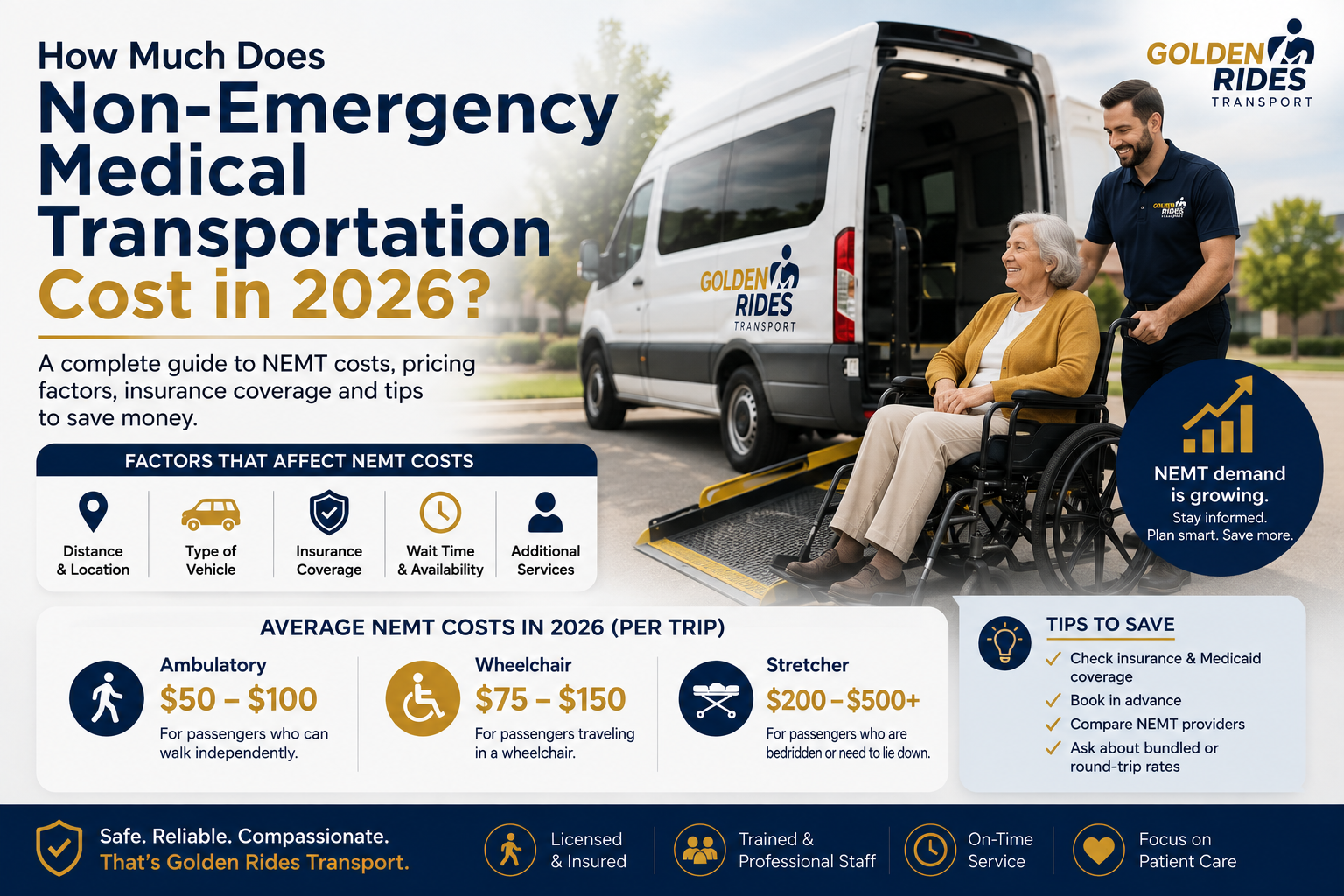
Ambulatory transport is for patients who can walk and sit upright without assistance. This is the cheapest option, typically running $25 to $90 one-way, depending on the region. Chicago-area rates, for example, land around $40 to $75, while Illinois statewide averages run $35 to $65.
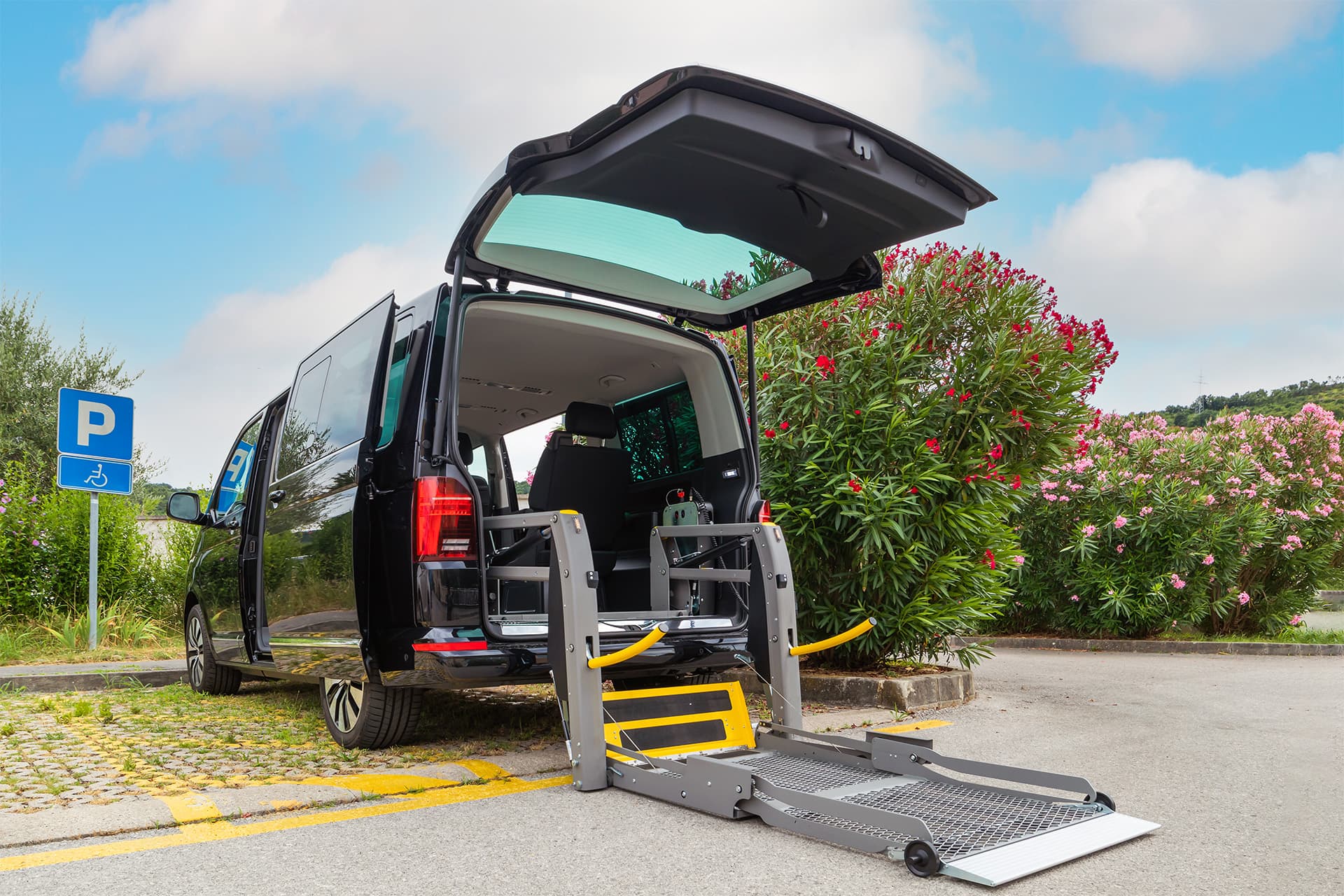
Wheelchair transport requires a van equipped with a ramp or lift. Expect to pay $45 to $145 one-way. Rates tend to run higher in expensive metro markets. California providers charge $80 to $145, while Illinois wheelchair rides average $65 to $115.
Stretcher transport is for patients who cannot sit upright and need a gurney-equipped medical van. This is by far the most expensive tier, generally costing $100 to $650 one-way, with some markets like Chicago seeing rates as high as $500 and California reaching $650 for longer or more complex trips.
There's also a bariatric transport category for patients who need specialized equipment and reinforced vehicles to accommodate larger body sizes. Because it requires extra staff and heavier-duty vans, this can run over $500 per trip.
Per-Mile Charges Add Up
Beyond the base rate, almost every provider tacks on a per-mile fee once you exceed a certain distance from the pickup point. In most metro areas, that's roughly $3.50 to $5.00 per mile for standard trips, though rates can range anywhere from $2 to $16 per mile depending on the vehicle type and provider. Stretcher transport mileage tends to sit at the high end of that range because of the specialized equipment involved.
This is where costs can sneak up on people. A short ambulatory ride across town might stay close to the base rate, but a wheelchair or stretcher trip to a specialist 30 or 40 miles away can turn a $50 base fare into a $200+ total bill once mileage is factored in.
Long-Distance and Interstate Transport
For patients being transferred between facilities, discharged to a home in another state, or traveling long distances for specialized care, pricing shifts to a different scale entirely. Long-distance NEMT trips typically run $125 to $1,200 or more, depending on the vehicle type, total mileage, and whether extra medical staff needs to accompany the patient.
Location Matters More Than You'd Think
There's no national rate card for NEMT, and geography plays a huge role in what you'll pay. High-cost regions like California, New York, and Washington D.C. tend to sit well above the national average; a round-trip wheelchair ride in these markets can easily top $250. Rural areas present a different challenge: while base rates might look similar to urban ones, the sheer distance between patients and medical facilities means mileage charges pile up fast. Urban markets, by contrast, often benefit from more competition among providers, which can help keep prices in check.
Why Prices Are Climbing in 2026
NEMT costs have risen noticeably this year, and there are a few clear reasons why. Rising wages for certified drivers amid a broader healthcare labor shortage have pushed up operating costs across the industry. Vehicle maintenance for specialized wheelchair vans and stretcher-equipped medical vans has also gotten more expensive. On top of that, longstanding federal Medicare add-on payments that helped subsidize provider operations, including bonuses for pickups in rural areas, expired at the start of the year. Without a permanent legislative fix, many providers responded by raising private-pay rates by 15% to 25% to offset the lost revenue.
Does Insurance Cover It?
This is one of the most misunderstood parts of NEMT pricing. Original Medicare (Parts A and B) does not cover non-emergency medical transportation. Medicare's transportation benefit is limited strictly to emergency ambulance services, and even non-emergency ambulance rides are only covered when a physician certifies the patient is bed-confined and needs ambulance-level supervision during transport. Some Medicare Advantage (Part C) plans have started offering NEMT as a supplemental benefit, and a growing share of these plans now waive the copay entirely, so it's worth checking your specific plan.
Medicaid is a different story. Under federal regulation, every state Medicaid program is required to provide transportation to covered medical services, and Medicaid-eligible patients typically pay nothing out of pocket for NEMT. Coverage is usually coordinated through a managed care plan or a transportation broker, and non-urgent trips generally need 48 to 72 hours of advance notice for authorization, while urgent trips like hospital discharges can often be arranged same-day. Long-distance Medicaid-covered trips usually require more lead time, sometimes several weeks, due to a longer prior-authorization process.
Ways to Reduce Out-of-Pocket Costs
If you don't have Medicaid coverage or your Medicare Advantage plan doesn't include NEMT, there are still ways to bring costs down. Nonprofit organizations, such as the American Cancer Society, offer free rides for cancer patients traveling to treatment. It's also worth calling multiple local providers directly, since rates vary significantly even within the same city, and some offer discounted rates for recurring trips like regular dialysis or physical therapy appointments.
It's also worth remembering what's at stake if transportation costs cause someone to skip appointments altogether. For patients managing chronic conditions like kidney disease or undergoing cancer treatment, missed appointments can lead to hospitalizations and worse health outcomes down the line costs that dwarf even the higher end of NEMT pricing.
The Bottom Line
Non-emergency medical transportation costs vary widely, but as a rough guide for 2026: expect $25 to $90 for ambulatory rides, $45 to $145 for wheelchair transport, and $100 to $650 for stretcher service, plus mileage charges on top. If Medicaid covers you, your out-of-pocket cost should be zero once a trip is authorized. If you're paying privately, your best move is calling a few local providers, asking about recurring-trip discounts, and checking whether nonprofit transportation programs serve your specific medical need.Looking for a Reliable Provider at a Fair Rate?
If you're in the Houston, Texas area and want to skip the guesswork, Golden Rides LLC is a veteran-owned NEMT provider worth calling. They offer wheelchair, ambulatory, hospital discharge, dialysis, long-distance, and airport/cruise port transportation across Houston and surrounding communities like Katy, Sugar Land, Pearland, and The Woodlands. Their drivers are trained specifically for medical transport; they run 24/7 for both scheduled and urgent trips, and they accept Medicaid, Medicare, and private pay, along with major brokers like MTM, Modivcare, and Veyo.
Rather than juggling quotes from multiple companies, you can call 347-889-0610 or book directly through their site to get a rate and confirm coverage for your specific trip. It's a solid starting point if you'd rather make one call and have it handled than shop around endlessly.